Monday, October 27, 2014

MileGrams - Training Wrap-Up!

This is it, people. We are just 7 days away from Marathon Sunday. A little less than a year ago, I decided to sign up for this adventure, and now it is here. While I'm incredibly excited, I'm also feeling like I'm on an emotional roller-coaster from hell.


I'm finding the amount of logistics that I need to figure out completely overwhelming. I'm considering hiring an intern to make all of these important decisions for me.  


What should I eat for breakfast, lunch and dinner all week?


How will I entertain all of my fabulous family and friends coming in town?


What will I wear over my race clothes the morning of the marathon?


How will I make sure the out-of-towners navigate NYC successfully?


How will I make sure to find my friends and family in the crowds?


I'm accepting internship applications from interested parties. Please submit asap. All kidding aside, I am super excited and the last month of training was incredible. Without further ado, here are my MileGrams for the month of October.

Started the month with an 18 Mile, 3 loop run in Central Park in the pouring rain.

 Central Park was quiet and creepy in the rain. Appropriate for October. 

Team warm-up and stretch under a bridge. Trying to psych ourselves up for 3+ hours in the rain!

 Coach Asteria formed a little Latina group for the 18 mile run. Ran the whole way with this awesome Colombian friend! Having to speak Spanish the whole time was an excellent way to keep distracted.

Beautiful Wednesday Practices in Central Park.

 This park is really magical. I've loved having an excuse to be there at least once a week.


 Waffle cart I pass on my way to the team meet-up location. Always tempting and always smells like heaven. 

20 Mile Manhattan Run
We started in Central Park, headed to the East River Park pathway, down to lower Manhattan, up to Riverside Park on the west side, back east to Morning Side Park and ended back in Central Park. I have no pictures from the actual run because it was pouring rain (again!) and freezing.


 2047 calories burned! Where do you even start with all of those calories at your disposal?!

This is where you start when you have so many calories to replenish and a strange nostalgic craving for Bagel Bites. Yes, they were amazing and lived up to my memories. 


Queensborog Bridge Run
Ryan joined me for my first run over the Queensboro Bridge. Clocking in at mile 16 on the marathon course, it has the reputation of being a bit brutal. To make things even more exciting, we ran directly to our doctor's office to get our flu shots. Great way to spend Columbus Day.

 View of Manhattan from the Pulaski Bridge, a small bridge connecting Brooklyn and Queens, also on the marathon course. 

 The Queensboro Bridge ascent.

 Almost to the peak!

 Terrible bridge selfie. Running ain't pretty.

 Marathon posters going up around the city!

Mount Vernon Trail Run
My last long run was a 13 miler in Washington D.C. After two weeks of long runs in the rain, I was treated to some amazing sunrise views.


 Is this real life?


5 mile Poland Spring Marathon Kick-Off Race
I capped off the training with this kick-off run in Central Park. Great way to shake-off race day nerves!

 Ryan joined me for the race. The start time was a little early for his liking.

 Team for Kids!


 The grandstand seating for the marathon finish line is already set up!

Ryan's first race and first 5 mile run since high school.


And that wraps up the training pictures! Next week, I will have my final post on the marathon. I will see you on the other side . . .


Monday, October 20, 2014

Inspirations - Sisters

We are two weeks away from Marathon Sunday!  How can that be?!?


Two weeks left means that this is my final Inspirations post. Therefore, I thought it only fitting to end with the original inspiration for my marathon run, my sister. 


My sister raised money for charity and ran the D.C. Marine Corps Marathon in the fall of 2002. At the time, we both lived in D.C. I was a sophomore in college and she was a second year law student. Although many years back, I remember accompanying her for some Benihana extravaganzas after some of her long training runs. 


I also remember being so impressed that she had to raise so much money on her own. After my own fundraising endeavors this year, I'm even more impressed! Not only was she my inspiration for the marathon, but about a year ago, she invited me to be part of a writing club. Without that invitation, and the encouragement to write on a weekly basis solely for the joy of writing, I probably wouldn't have had the courage to start this blog. About a month ago, she started her own blog adventure. So, I asked her to do a guest blog post on her own marathon experience. Below is her post and you can follow her blog here. 

The Marathon


picasso motherhood 1901.jpg

I would not call myself a runner and neither would most anybody. I’m not really built for running of any type, neither sprinting nor long distance. I ran a marathon once, though. I got the idea from an advertisement at Marvelous Market near my building. It said anyone could run a marathon. It said Whitman-Walker Clinic would train you in return for fundraising. It seemed like a project and I hadn’t had a project since the science fair in 11th grade.

The orientation was in a public library in Cleveland Park, kinda near my building. I didn’t frequent places like that then. I hadn’t since I was eight when my mom would take me and my sister to the public library once a week the summer after 3rd grade. The library had a program challenging kids to read 100 books over the summer. I wanted to win so I read Berenstain Bears books, and the like, which were below my reading level. I remember filling out my reports on the little pre-printed cards. I’d read 25 books per week. Some of the librarians disapproved. I didn’t care. I wanted to win that challenge.

Pablo Picasso "Le Gourmet" (1901).

Getting to the library to register for the marathon was hard. I remember. The whole day leading up to it, the logistics of getting there swirled around and around in my brain, like a nightmare. A bus or long walk, the metro, going into the metro, paying for the metro, finding the library itself, it all just seemed like too much. I was bone tired and panicked. Debilitated. Leaving the house that evening, I felt like you feel when you’re on the verge of tears for too long. I felt as insubstantial as a leaf. Empty. I carried a well of tears then in my chest. They would ache, very dimly threatening to spill over, but the threat seemed to recede by the day and this left me feeling engulfed, claustrophic without the adrenaline. It was like walking around with a gag on, a silencer, a mute button. I suffered from acute and chronic loneliness. I was 22.

Pablo Picasso "Absinthe Drinker" (1901-1902).

I did make it to the library that day. It was evening. I wanted to be a normal person and to have a real life.

Pablo Picasso "Mother and Child Acrobats" (1904-1905).

We had group practice runs once a week starting that spring and finishing in early fall. I can’t remember what my pace was, but it was slow. We were meant to finish in around 5 hours. I was grouped together with all sorts of folks with whom I would not have mixed in real life. I don’t remember most of their names. We were all different ages, colors, sizes and from different neighborhoods. There was no pretense amongst us.

Pablo Picasso "Family of Saltimbanques" (1905).

None of us were runners. We huffed and puffed and over the weeks there came to be between us that easy silence, that respectful familiarity and lots of laughing. I did not know that it was the pretense and the disdain that strangled me and I had not had much occasion to laugh.

Pablo Picasso "Woman dressed in blue" (1901).

I do remember Ted. He was a very large, very white, older man. When I say he was large, he was probably over 6’4’’ and heavy. He was like a giant. Ted was the only man in our group and we fretted over him. Ted burned so easily. I winced just to see him out in the sun at all. Also, his nipples would bleed when we got to the longer runs. And, he huffed and puffed more than any of us. He didn’t talk much because he couldn’t. I worried he might keel over and die during practice runs. Ted was running the marathon and fundraising for his brother. We all had our reasons. Watching his lumbering body, soaked in sweat, bleeding, not talking much, but with an open, vulnerable, friendly, easy yet quietly determined way about him, I wondered. He seemed to cancel out so much that seemed inescapable to me.

Pablo Picasso "Motherhood" (1901).

I didn’t train past 22 miles and I lost contact and connection with my group leading up to the race. I wasn’t good then at linking up cause and effect in my life. I was really good at doing it about everything else. Being around these people, week in and week out, for almost 6 months had made me feel . . . so much better. I didn’t think quite so much about myself during that training time. It had been such a relief. I was out in the sun, making it to the training runs without being paralyzed by the logistics of leaving the house by myself. I didn’t realize it then, though. I thought that things came and went and that I had no control over any of it. I took my lack of control over the weather or disease or pain to be a lack of control over anything at all.

Pablo Picasso "Houses on the Hill" (1909).

These people I ran with for 6 months were not even supporting characters in the drama of my life. They were extras. Extras in a movie make the movie seem like the real world. An airport is full of people so if you have an airport scene you need the extras to make it seem like the heroine is in a real airport. The extras made it seem like I had a real life for that short bit of time. The life I secretly wanted and acted like I had. I didn’t even miss them. Indeed, once I got away from them, I thought that I couldn’t possibly run with strangers. I would run alone.

Pablo Picasso "The Actor" (1904).

I don’t recall the details, but about two weeks before the race I asked my sister to run the first five miles with me. There was a lot between us then, as there was between me and anybody with whom I had ever been close. I didn’t want to run alone. Yet, I had put myself in a situation where I would probably run alone. And, then I would hope for a miracle to happen so that I would not end up where I was headed. The thing is, my life has been full of miracles, and I have not ended up where I was headed. My sister agreed to run the first 5 miles with me.

Pablo Picasso "The Visit (Two Sisters)" (1902).

I went into the marathon thinking I would have hallucinations. I don’t know why. I think I’d heard something somewhere that sometimes this happens. I was ready for any kind of mind-bending experience. But, not for physical injury.

Around mile 12, I had a caffeinated goo which I’d never used before in training. I got a caffeine-runner’s high and picked up my pace. Around mile 18 the long tendon on my left leg, the one that runs from your hip to your knee, went as hard as a rock and I had intense pain from hip to knee every time I came down on my left leg. It wasn’t going away. I ran maybe a mile or two more. I thought, I can’t go on and I felt panicky. Maybe I would not make it across the 14th street bridge before they opened it back up to traffic.

But, we did. I was giddy with relief. A very fit looking marathon runner, with a real runner’s body and the full get-up, was being taken away from the bridge on a stretcher. I remember thinking, wow. You just never know. I’m making it past the 14th street bridge and that guy is not. I felt humbled. I hobbled the last 6 miles and finished in just around 6 hours.

My sister ended up running the whole thing with me. They wouldn’t let her cross the finish line because she wasn’t registered for the marathon. I could not have done it without my sister running next to me. She was my Samwise Gamgee! I was the one who had to get across the finish line and she ran with me so I could do that. Perhaps I could have done it alone, but it would have been a misery. We talked, we laughed.

When we got close to the finish line, there were so many people on the sidelines yelling and screaming, in a good way, I’m sure. I felt overwhelmed and I wanted to cry. It felt like they were heckling me. A Marine kept yelling to my sister, “Where’s your number?” because she couldn’t cross the finish line if she wasn’t registered. We both thought he was trying to pick her up. I felt really annoyed by that. Finally, we both understood and before I knew it she had merged into the crowd and I lost sight of her.

As I ran that very short stretch by myself, the whole weight of the thing came crashing down on my shoulders and I felt so pissed at all the random people who had been skeptical of the concept of running a marathon. Like I am skeptical of the concept of low carb diets.

When you cross the finish line, a Marine wraps you in a blanket and takes the tracker off your shoe. They kneel in front of you to do it. It is so humbling. As I crossed the finish line, I started crying uncontrollably, the pain of my injury and the emotional burden of it on my rigid depleted soul had allowed the pent up inconsolable loneliness to burst past the dam of my pride and my fear and my loathing of myself and every person there. The Marine looked at me disapprovingly. I didn’t care. There was a startling clarity to the whole encounter.

I felt like I was made of flesh and bone, just like everyone else.

Pablo Picasso "Girl with Mandolin (Fannie Tellier)" (1910).

And here is a picture of my sister crossing the finish line and looking back for me. 


Sunday, October 12, 2014

Nerd Facts - What actually happens to the body during a marathon?

The marathon is only three weeks away! So, for the final Nerd Facts post, I've decided to research exactly what happens to the human body during a marathon. Since I now have some experience with long runs, I started the research expecting to find cut and dry scientific articles on water and sodium loss, etc. 


Instead, I was greeted with article names such as, "The Terrifying Hell a Marathon Inflicts on the Human Body," and subheadings such as, "Sudden Death," and "What about Blood-Pissing?"


All of the articles consisted of subsections based on the worst case scenarios. So, I will stick with that format here. I mean, it is Halloween season and all.

Hyperthermia


The most obvious condition that can result from running a marathon is hyperthermia, or, greatly increased body temperature. This can result from dehydration, climate, running at a faster pace inducing higher metabolic rates, or a combination of factors. Let's begin with dehydration, the most familiar issue thanks to an $8 billion sports drink industry.


The average sweat rate for runners is 1.2 liters per hour. Thus, one way to prevent against dehydration is to drink as much as you are losing. However, this is easier said than done during a marathon. 


I'm incredibly impressed by those runners that just fly through the water stations, throwing back fluids without reducing their pace. I, on the other hand, enjoy slowing down to a walk, to make sure that the fluids make it down my throat, as opposed to all over my face and shirt. 


A less intuitive method of avoiding dehydration, but perhaps not a less lucrative business, is stripping off layers of clothing. During the NYC marathon in particular, the first mile is on a windy, chilly bridge. However, once your body warms up and you hit the warmer city streets, you don't need the same amount of clothing that you did while standing around waiting for the race to start. Keeping too many articles of clothing on will just increase how much you sweat. So marathoners, this is the perfect time to legitimately get your strip on!


Many consider dehydration as the main cause of hyperthermia in marathoners. However, studies have shown that the increase in metabolic rates actually has a stronger correlation to increased body temperature. Most marathoners pick up their pace in the later miles of the race. At this point, the body becomes less efficient at using energy, thus producing excess heat and raising the body temperature. 


So, to avoid hyperthermia, experts recommend trying to take in 8-10 ounces of fluids every 10 to 20 minutes during a marathon, and shedding clothing according to body temperature.


Hyponatremia

So, staying hydrated is the key, right? Apparently, there is such a thing as water intoxication, or in technical terms, hyponatremia. Women are more prone to cases of hyponatremia, since we have smaller bodies and tend to run slower. 


Less water can cause more dilution in smaller bodies and the longer you run, the more you are at risk of taking in too many fluids. Hyponatremia can cause swelling of the brain, which estrogen can in turn exacerbate once the swelling begins. 


Hypothermia

Not only can your body temperature rise, but it can also fall to dangerous levels. Usually, environmental factors such as wind, rain and snow can contribute to hypothermia during marathons. Running the last half of the marathon slower than the first half can also result in not enough body heat being produced to maintain proper body temperature. Additionally, when salt is lost through sweat, it can build up in clothing and pull away necessary heat from the body. 


The experts recommend wearing enough layers to keep a normal body temperature and to replace wet clothing when possible. 

Glycogen Depletion

During a marathon, muscles are fueled by glycogen in the muscles cells and from blood glucose. As blood glucose gets used up during prolonged running, the liver converts its stores of glycogen into glucose, which gets released into the bloodstream to fuel the muscles. When glycogen runs low, muscles are forced to use slow-burning fats to operate. This results in the dreaded wall. 


Thus, marathoners are encouraged to carb-load in the days leading up to the marathon by eating meals with around 50% carbohydrates. Originally, I thought I could have a meal that consisted only of Olive Garden endless breadsticks and Mrs. Field's Cookie Cake. 


However, eating only carbs could lead to a feeling of heaviness and bloat, which could result in slower times. Additionally, experts recommend taking in carbohydrates during the race, to avoid complete glycogen depletion. The recommended dose is 120-180 calories per hour and 30-40 minutes prior to fatigue. 

Weakened Immune System

Running a marathon results in muscle damage, which requires immune cells for repair. The flood of immune cells to the muscles can also weaken other cells, compromising the immune system as a whole and leaving it less able to protect the body. Apparently, this could make marathoners more susceptible to upper respiratory tract infections. The experts recommend the usual things to avoid illness, but my favorite are the following:
  • Keep other life stresses to a minimum. 
  • Avoid sick people and large crowds. 
  • Avoid overtraining and rapid weight loss.
Have these experts ever seen a marathon? 
  • You are hoping that all of your out-of town guests make it to their spectator spot while streets are closed and subways packed.
  • You are running with thousands of similarly immune suppressed people in usually chilly conditions. Since cabs are impossible to get, you have to get on the subway to head home, full of germy tourists. 
  • Clearly, they have never seen a marathon training plan, which consists of running half-marathons or more each weekend for 3 months.
Conclusion


Now that I have concluded my research, I now know that I must do the following things to avoid certain death on Marathon Sunday:

1. Somehow, find the illusive line between keeping hydrated and brain-swelling-inducing water intoxication.


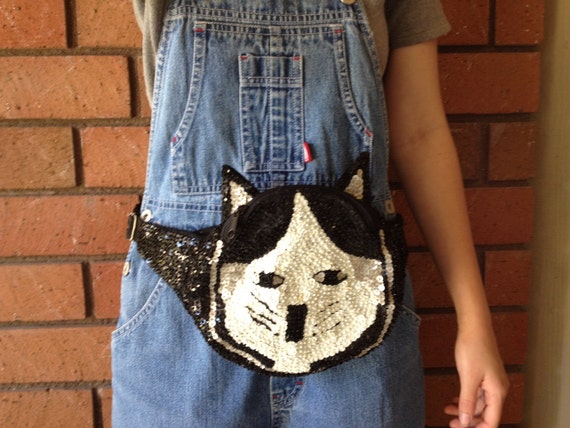
2. Find a fanny pack big enough to carry extra clothing for all possible weather conditions.


3. Hire chef/nutritionist to make all my meals during Marathon Sunday to ensure I carb-load properly.


4. Since my fanny pack will be full of clothes, guilt-trip friends and family to post-up at exactly each 30-40 minute interval on the marathon course to feed me carbs.


5. Magically teleport home directly from the finish line to avoid crowds and germs.


6. Oh, and while I'm juggling all of that, ACTUALLY RUN A DAMN MARATHON!


I'm really glad I saved this topic until three weeks before the marathon.